San Francisco, CA
AI Engineer
I design and build AI solutions for enterprises, from finding the right problem to architecture, evals, and deployment. I've spent ten years inside one, driving transformation at Chevron, and I ship my own AI apps to stay close to what the models can do.

Experience
Enterprise AI lead on a new initiative to design and deploy AI solutions for global energy operations. Previously owned two workstreams of an enterprise-scale LLM-powered recommendation engine, driving problem framing, requirements, and evals with AI engineers, applied scientists, and business stakeholders.
Advanced coursework spanning machine learning, product design, software architecture, innovation strategy, and systems thinking across MIT's School of Engineering and Sloan School of Management.
Grew from project management into product management, advising the Global Supply Chain Leadership Team and partnering across business, engineering, and operations to drive digital transformation in transportation and logistics.
Portfolio
A Wall That Paints You: Real-Time Style Transfer for a Dance Installation
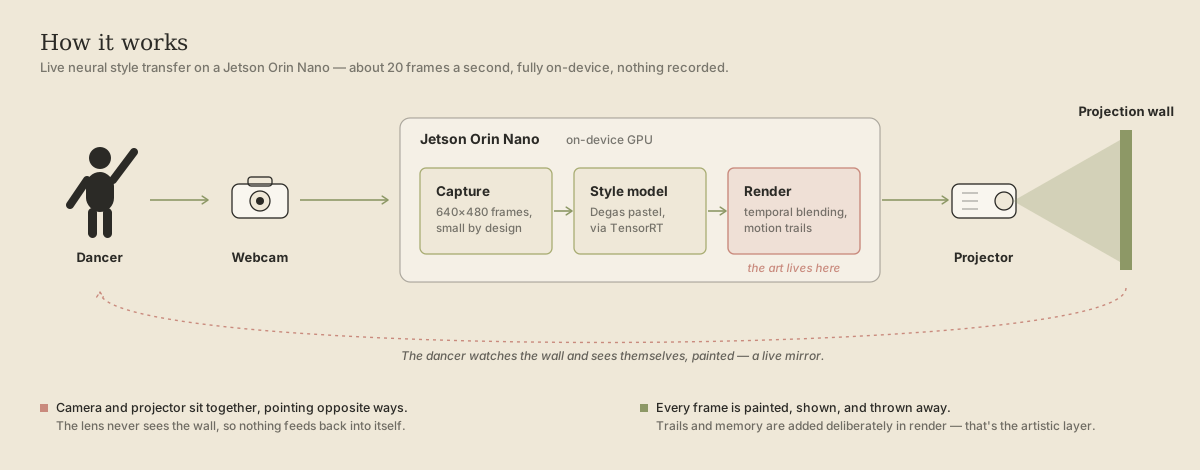
Interactive AII missed out on seeing the Immersive Van Gogh exhibit in San Francisco, but after attending my friend's dance performance, I thought wouldn't it be cool to combine the two? I built a camera-to-projector pipeline on an NVIDIA Jetson Orin Nano that applies a painterly style to a live feed, running entirely on-device with no cloud dependency and nothing recorded. Now anyone can select their favorite artist and then experience seeing themselves through the eyes of that artist.
- Run fast feed-forward style transfer on live webcam input, optimized with TensorRT to reach real-time frame rates on edge hardware.
- Treat the render layer as the artistic layer, separate from the model — temporal blending, motion trails, and how the piece behaves when the room is empty.
- Design the physical installation so the camera never sees the projection: camera and projector share one position facing opposite ways, eliminating the feedback loop.
Work in Progress. Github repo coming soon.
Built with Claude Code · NVIDIA Jetson Orin Nano
Resonance: Mapping My Music Taste with a Knowledge Graph
Web ApplicationI wanted to understand my music taste as a connected system rather than a list of top artists and songs. I built Resonance from 343K Spotify listening events, reconstructing 14,485 listening sessions and turning 157,971 meaningful plays across 29,655 tracks and 12,096 artists into an explorable graph where you can see how two songs are connected, and what makes them connected.
- Transform raw Spotify listening history into structured sessions, entities, and relationships.
- Enrich tracks and artists with external metadata (MusicBrainz, GetSongBPM) while preserving full source provenance.
- Explore four views (sequence, playback behavior, listening context, and confirmed connections) through a custom Canvas renderer built to keep ~30,000 tracks smooth while orbiting, zooming, and switching views in real time.
Built with Claude Code
Coffee Shop Finder + Friend Invites
Web ApplicationI wanted a more personal way to find cafes than searching on Google Maps. I created a neighborhood coffee shop finder to discover cozy, work-friendly coffee shops, see nearby parks, and plan an easy weekend meetup around them.
- Discover work-friendly cafes with Wi-Fi, outlets, hours, maps, and AI-generated summaries.
- See nearby parks and use the map to plan a cafe-plus-walk outing.
- Pick a cafe, invite a friend, collect an RSVP, and save the invite to your calendar.
Built with Claude Code x Codex · Drawings by me using Figma
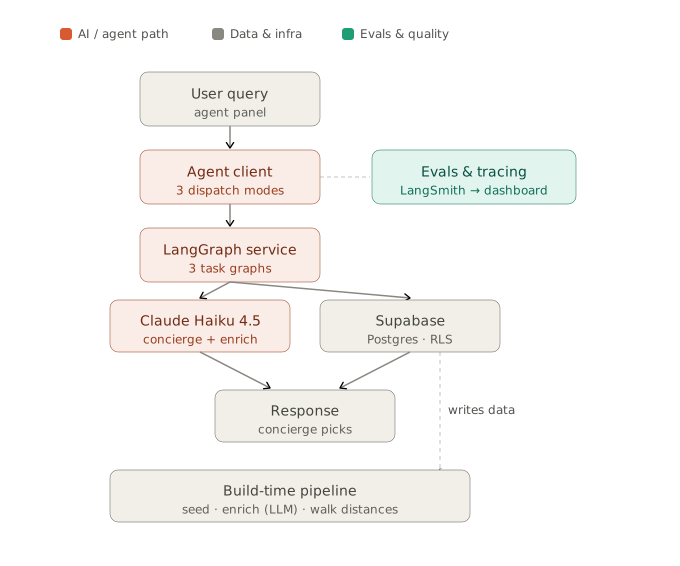
Monet in Motion: An AI-Powered Interactive Art Exhibit
Interactive AII built a virtual Claude Monet gallery where your hand controls the experience, using webcam-based hand tracking to render visual effects and move through the collection.
- Track hand movement through the browser with MediaPipe Hand Landmarker.
- Use gestures to navigate the gallery and control the visual experience.
- Explore interaction patterns that could translate to fitness, therapy, and patient support.
Built with Claude Code · Powered by MediaPipe · Deployed on Vercel
Curated Tech Event Recommendations in San Francisco
Web ApplicationAfter scrolling through Luma pages and event emails, I put Codex to work on a tool that recommends the next two weeks of San Francisco tech events based on my interests.
- Scan upcoming events and make the strongest recommendations easier to spot.
- Filter for the rooms most likely to match my AI, product, and builder interests.
- Keep the output lightweight enough to check quickly before deciding where to go.
Built with Codex · Designed with Claude · Deployed on Vercel
AI Voice Tutors, 2025 vs. 2026
Voice AIIn August 2025, I built a multi-language voice agent using ElevenLabs and OpenAI's GPT-5 to automatically match a user's conversation to the right language agent, complete with RAG-powered exam prep and conversation guides for French, Spanish, and Korean.
In April 2026, I rebuilt the same voice-based language tutor eight months later with the same concept and prompts to see the effects from the newest model, Sonnet 4.6. The difference in latency, naturalness, and error recovery is the clearest demo I have seen to show how fast this space is moving.
- Routes conversations into French, Spanish, or Korean practice with language-specific agents.
- Pairs RAG-powered exam prep with guided conversation practice and study content.
- Compares the jump from practical voice assistance to more natural, dialect-aware coaching.
2025: OpenAI GPT-5 x ElevenLabs Turbo · 2026: Claude Sonnet 4.6 x Eleven v3
Statura, a Posture Sensor with Haptic Feedback
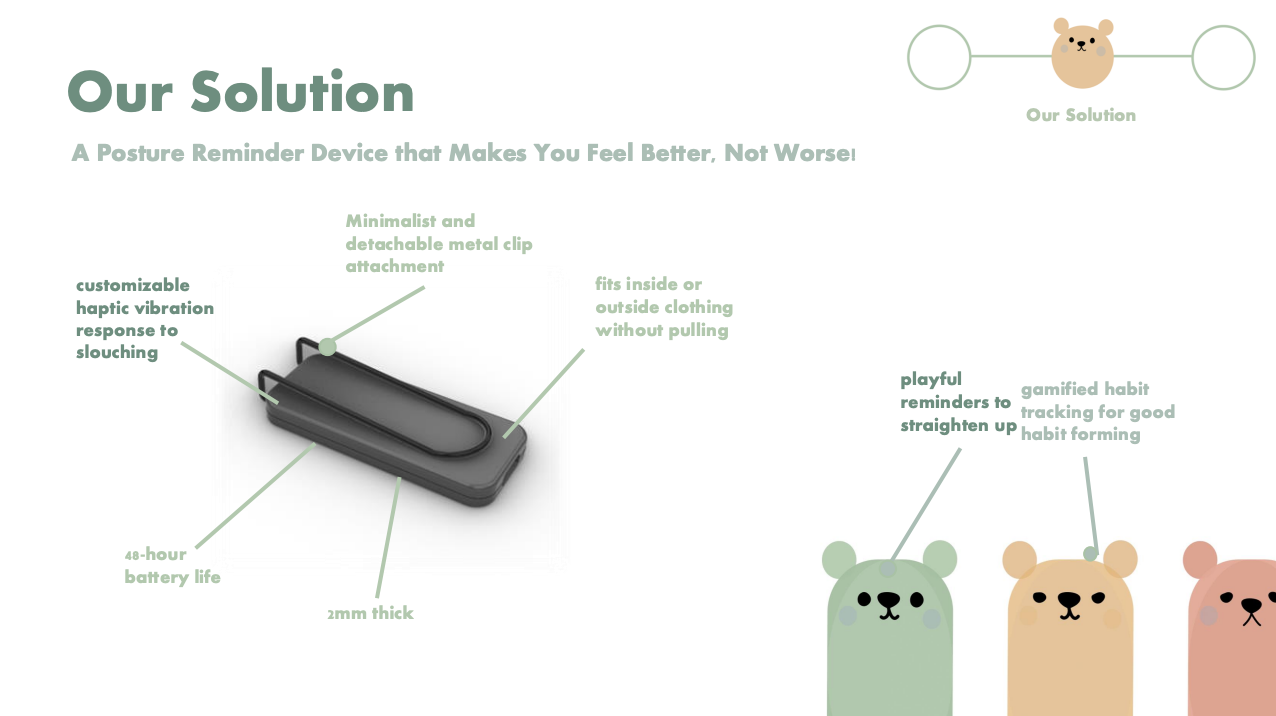
Product DesignIn 15.783 Product Design and Development, I worked with a team of mechanical engineers, RISD industrial designers, and fellow Sloan students to build a real working product for a problem a few of us felt firsthand, sitting too long at desks and slouching while watching TV.
Statura is a compact, clip-on posture sensor with haptic feedback and a gamified companion app. The idea came from a simple insight we kept hearing in user interviews. People wanted to improve their posture, but existing solutions were either too obtrusive, too uncomfortable, or too easy to ignore.
- Move from prototypes taped to t-shirts to a polished alpha prototype with Bluetooth, haptic feedback, and a 48-hour battery target.
- Design a companion app that makes posture feedback feel encouraging through a character that levels up as your posture improves.
- Balance engineering optimization with the design question of whether someone would actually want to wear it.
Built with MIT 15.783 teammates · Product concept, research, prototyping, and pitch
Cold-Climate Autonomy: Winter Operations for Glydways × MIT SDM
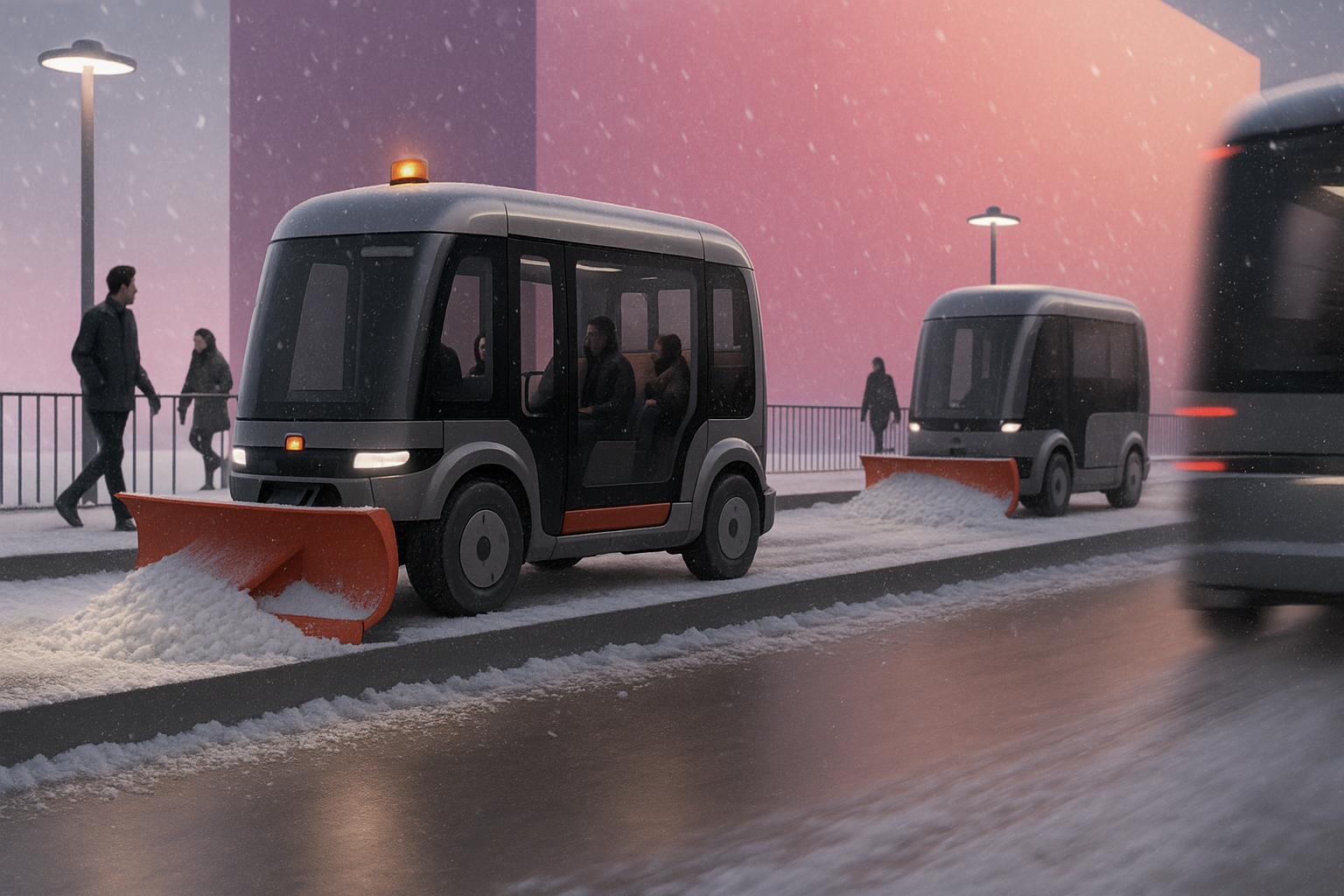
Systems EngineeringIn the MIT System Design and Management Core, our team partnered with Glydways to answer a strategic systems question: could their autonomous personal rapid transit architecture operate safely in winter?
- Evaluate six major architecture options across cost, reliability, and operating constraints.
- Use Monte Carlo simulations to compare winter uptime under different system designs.
- Recommend a dedicated autonomous snowplow with salt distribution on the Pareto frontier.
MIT SDM team project · Systems architecture, simulation, and operating strategy
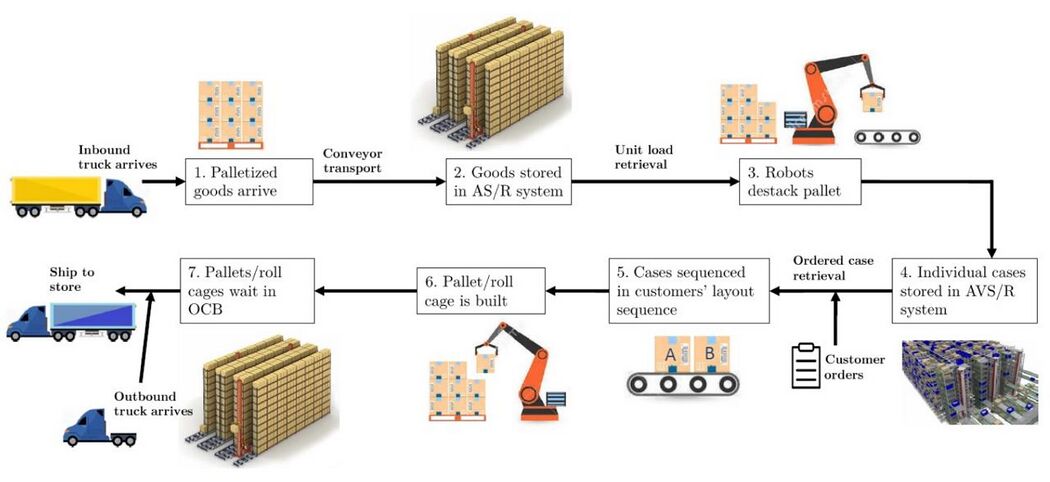
Warehouse Robotics Roadmap: Autonomous Mobile Robots for Logistics
Systems EngineeringIn MIT's Technology Roadmapping class, our team built a 20-year technology roadmap for autonomous mobile robots (AMRs) in warehouse logistics, modeling how design tradeoffs in payload, battery life, and navigation translate into fleet-level performance and financial return.
- Benchmarked 18 commercial AMR platforms (Amazon Robotics, Rockwell, Zebra, and others) across payload, speed, and battery life to map the competitive tradespace.
- Derived technical models linking picking rate and continuous operation time to design variables, using sensitivity analysis to prioritize R&D investment.
- Built a 20-year financial model projecting $260M NPV, and recommended a $50M product strategy spanning path optimization, digital-twin training, and swarm robotics.
MIT SDM team project · Competitive analysis, technical modeling, and financial modeling
San Francisco, CA